The 2027 Tipping Point: Cloudflare's Warning and the Rise of Autonomous AI Bots
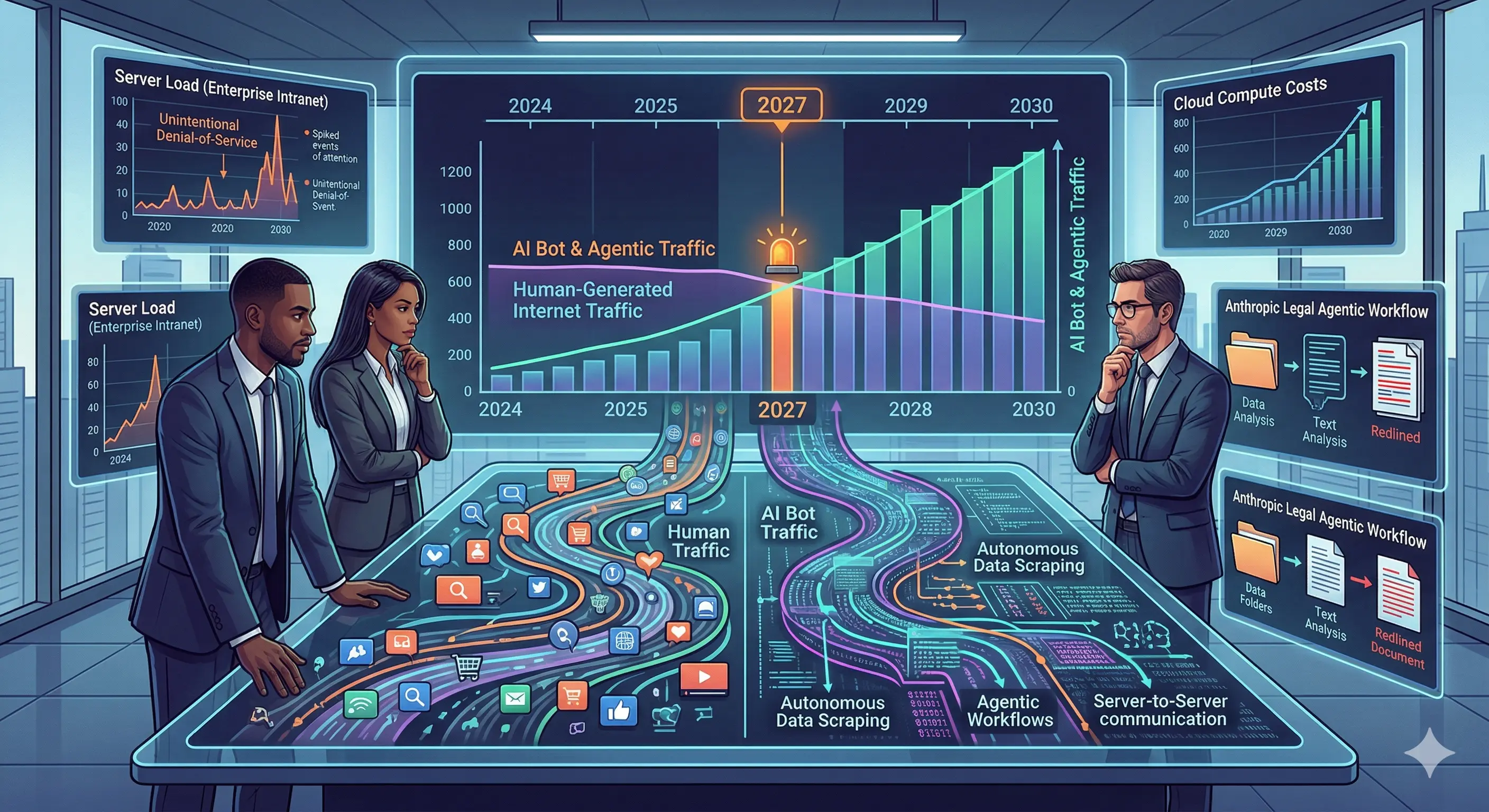
Cloudflare chief executive Matthew Prince recently delivered a stark timeline at SXSW: by 2027, internet traffic generated by AI-driven bots will surpass human activity. This is not a distant, abstract prediction. It is a fundamental infrastructure shift driven by the rapid deployment of agentic AI models that require massive data bandwidth to execute autonomous tasks.
Historically, bot traffic hovered around 20 percent of web activity, dominated by benign search engine crawlers. But today, the operational math has changed. If a human visits five websites to compare enterprise software, an AI assistant tasked with the same research might autonomously scrape thousands of pages. This exponential increase in activity is reshaping server loads, cloud budgets, and the baseline definition of digital productivity.
In real enterprise workflows, teams notice this shift first in their infrastructure bills, well before they see the promised productivity gains. IT departments are suddenly provisioning temporary server sandboxes just to handle the intense background activity of internal AI agents. You start seeing the strain when a localized model attempts to index a legacy database and effectively runs an unintentional denial-of-service attack on the company's own intranet.
The Macro Shift: When Agents Outpace Humans
We are moving away from an internet built for human consumption and toward an infrastructure built for machine-to-machine communication. As agents begin to perform complex, multi-step tasks on behalf of users, the sheer volume of server requests multiplies exponentially. Cloudflare has warned that managing this will require entirely new web infrastructure, including micro-sandboxes that spin up and tear down in milliseconds just to contain bot activity.
And this shift disrupts the fundamental business model of the open internet. If search engines and AI agents summarize content without passing human traffic to the original creators, publisher ad revenues collapse. The open web relies on the exchange of human attention for free information. When bots become the primary consumers, that economic exchange breaks down entirely, forcing publishers and brands to fundamentally rethink how they distribute digital content.
The Catalyst: Agentic AI and Anthropic's Legal Disruption
To understand how we reach this 2027 crossover, we have to look past simple chat interfaces and examine the rise of agentic AI. These are systems designed to operate software, organize files, and execute logic without constant human prompting.
Definition: Agentic AI refers to autonomous or semi-autonomous machine learning systems that can execute complex, multi-step workflows, directly interacting with file systems, databases, and third-party software to achieve a defined goal with minimal human prompting.
A prime example of this acceleration is Anthropic's recently launched legal AI tool, introduced as a plugin for its Claude Cowork suite. When this domain-specific agent was announced, it triggered an immediate double-digit stock selloff for incumbent legal software giants like Thomson Reuters, RELX, and Wolters Kluwer. Markets panicked because the tool moved beyond basic text generation and straight into autonomous workflow execution.
How the Anthropic Legal Plugin Works
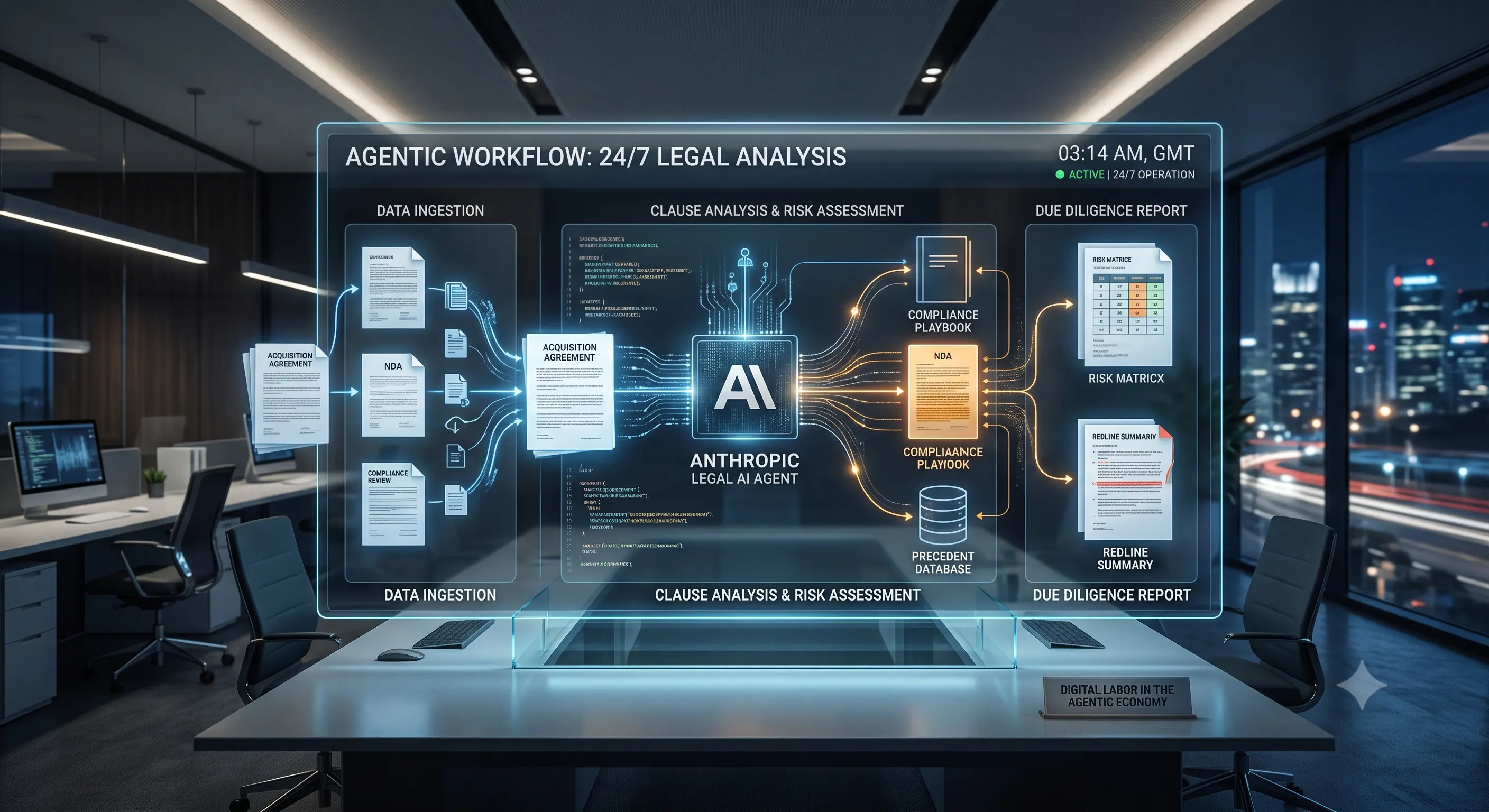
Anthropic's agent does not just wait for a prompt in a browser window. It actively integrates into a legal professional's local environment to take over repetitive knowledge work.
- Step 1: Secure Folder Integration: Users grant the agent secure, permissioned access to a specific local directory or cloud folder containing raw case files, vendor contracts, and internal policies.
- Step 2: Autonomous Contextual Triage: The AI reads through hundreds of pages without human intervention, cross-referencing incoming external agreements against the company's established internal compliance guidelines.
- Step 3: Risk Flagging and Drafting: It highlights missing clauses, flags unfavorable liability terms, and automatically generates standardized redlined drafts for the human attorney to review.
Real-World Enterprise Use Case
Consider a mid-sized enterprise procurement team processing vendor renewals. Instead of a junior legal counsel spending three days reading fifty software agreements, the Anthropic agent scans the entire folder overnight. By morning, it has grouped the contracts by risk severity, highlighting five agreements that deviate from standard arbitration clauses, and drafting boilerplate amendments for each. The human attorney only steps in to review the high-risk outliers and approve the final redlines.
Traditional Workflows vs. Agentic Legal Tools
| Workflow Stage | Traditional Human Process | Agentic AI Workflow |
|---|---|---|
| Document Intake | Junior associate manually reads and categorizes incoming contracts over several hours. | Agent indexes local folders and instantly categorizes documents by risk profile. |
| Analysis and Redlining | Manual cross-referencing against previous NDAs; line-by-line markup. | Pattern matching against thousands of past company contracts in seconds. |
| Drafting Responses | Writing bespoke responses or copying templates from legacy databases. | Generates standardized, compliant drafts ready for senior counsel review. |
Anthropic vs. Existing Legal AI Tools
Before the Cowork legal plugin, most legal AI operated as a walled garden. Platforms like LexisNexis or Harvey AI provided incredible capabilities, but they often required professionals to work within a proprietary, standalone interface. Anthropic shifted the paradigm by bringing the model directly to the user's operating system.
The core difference is horizontal integration. A general-purpose AI provider built a highly specific domain tool that executes tasks across a user's existing files, rather than forcing the user to upload files to a third-party dashboard. This localized, background processing is exactly the kind of autonomous bot activity that will soon dominate global web traffic.
Pros and Cons of Agentic Legal AI
Deploying tools like this presents distinct trade-offs for enterprise teams.
- Pro: Massive Speed Increases. Document triage that takes days is reduced to minutes, drastically accelerating deal cycles.
- Pro: Standardized Compliance. Agents enforce corporate guidelines ruthlessly, reducing human error in initial sweeps.
- Pro: Localized Processing. Direct folder access means sensitive data does not necessarily have to be uploaded to a vulnerable web dashboard.
- Con: Security Red Flags. Giving an AI read and write access to local directories triggers massive compliance and InfoSec friction.
- Con: The Hallucination Risk. Language models still occasionally invent facts or misread complex, nested clauses.
- Con: Loss of Junior Training. Automating entry-level work removes the traditional training ground for new attorneys.
Where This Breaks Down in Real Use
The narrative around agentic AI often skips straight to a frictionless future, ignoring the massive operational hurdles of the present.
This sounds efficient, but in practice, deploying an agent to read secure local folders triggers immediate panic from InfoSec. One issue that keeps resurfacing is the friction between AI capabilities and rigid corporate security postures. A vendor can promise that a local AI agent will seamlessly sort your legal folders, but the moment you try to deploy it, the Chief Information Security Officer blocks the port.
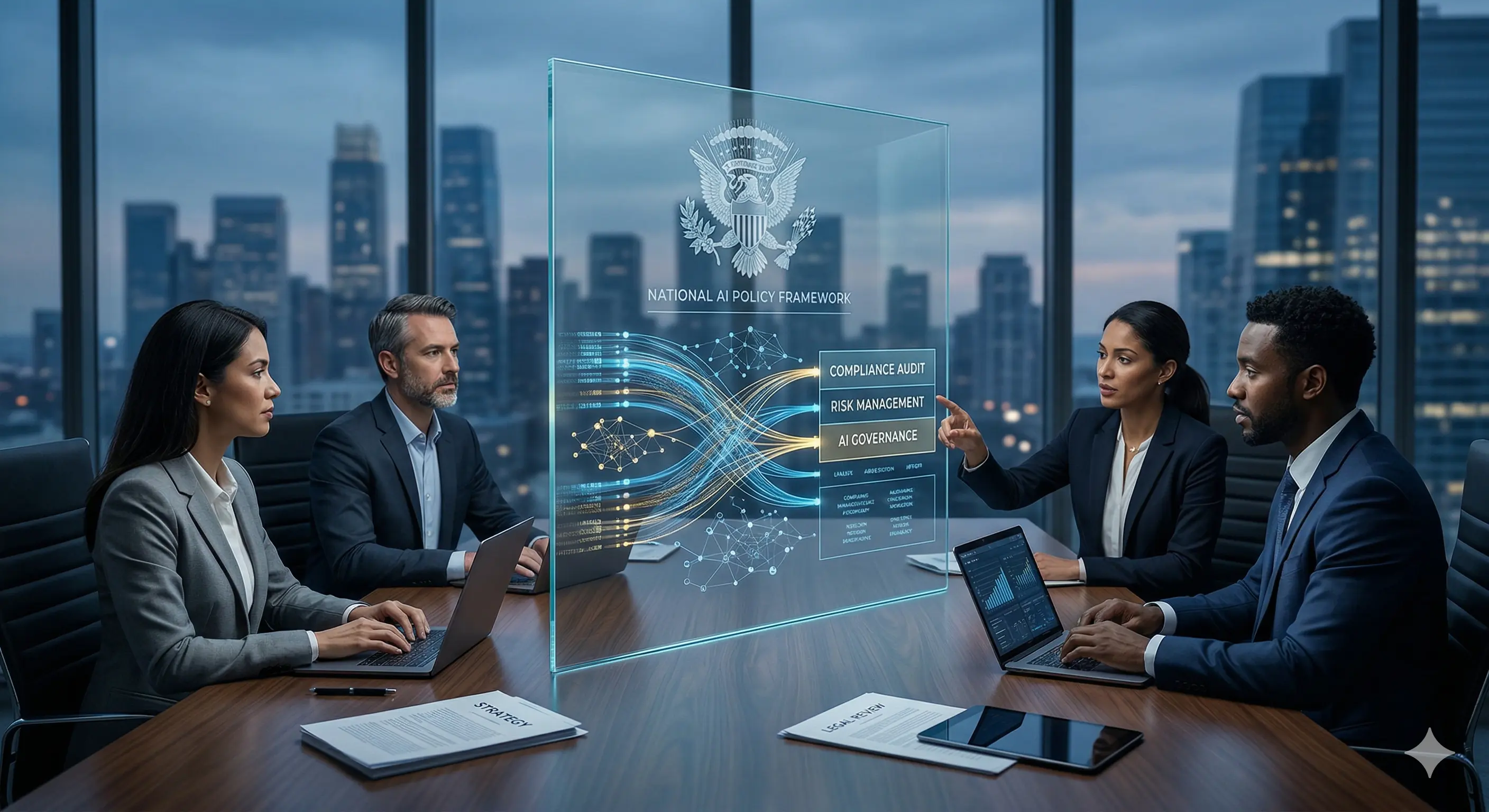
When leadership teams evaluate this, they often assume the technology is plug-and-play. But the reality is that allowing an autonomous bot to read, edit, and create files on a corporate network is a compliance nightmare that most legacy governance frameworks simply cannot support yet.
- Implementation Barriers: Companies are over-investing in software licenses but severely under-investing in the clean data architecture required to make the tools function accurately.
- Cultural Resistance: Senior partners are highly skeptical of delegating liability-heavy tasks to an algorithm, regardless of the vendor's safety claims.
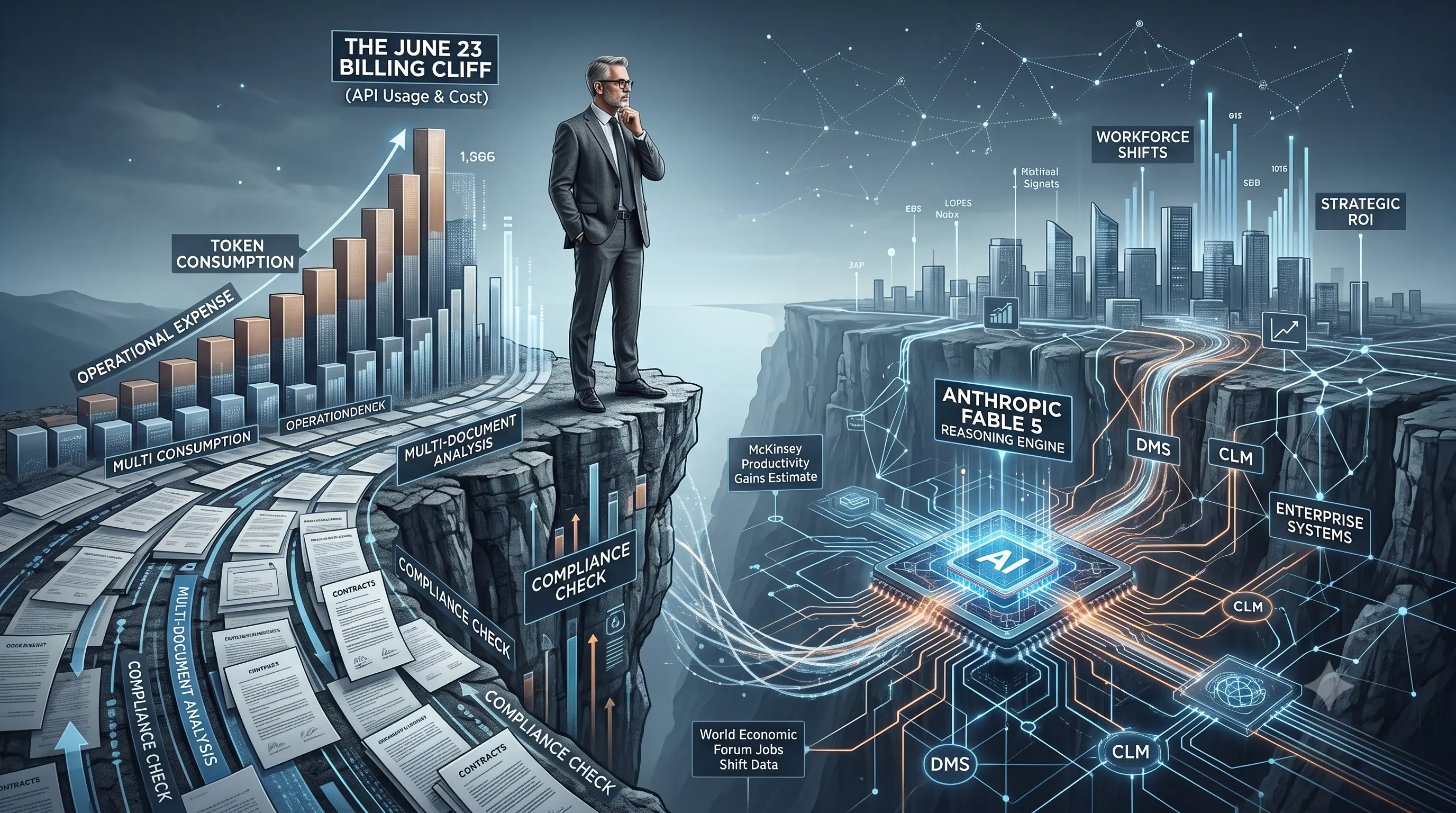
- Budget Misalignment: Running autonomous agents requires heavy compute resources, leading to unexpected cloud billing spikes that catch finance departments off guard.
- Over-Automation Risks: Applying agents to highly nuanced edge cases often results in more human rework than if a professional had just handled the task from the beginning.
Who Should NOT Use This
Agentic AI tools are not universal fixes. Small teams without established, standardized operational playbooks will find little value here. If your internal processes are chaotic, an AI agent will only automate that chaos faster.
Furthermore, highly specialized boutique firms dealing in novel, precedent-setting work should wait. These tools excel at high-volume, repetitive triage. They do not invent new legal strategies, and teams relying on them for deep, bespoke intellectual work will find the outputs overly generic and ultimately unhelpful.
The Board-Level Economic Implications
This is not just an IT infrastructure problem; it is a fundamental board-level shift. As bots outpace humans in digital activity, the economics of professional services are being rewritten.
According to the World Economic Forum, structural labor market churn will affect nearly a quarter of all jobs in the coming years, heavily skewing toward administrative and cognitive roles. When a single AI agent can perform the document discovery tasks of four entry-level analysts, the traditional pyramidal structure of legal and financial firms begins to collapse. Navigating the future of white-collar work (Internal Link Suggestion) requires executives to rethink hiring pipelines entirely.
And the financial stakes are massive. McKinsey estimates that generative AI could add $2.6 to $4.4 trillion annually to the global economy. However, capitalizing on that requires companies to successfully navigate the transition from human-driven workflows to bot-driven automation. Embracing AI-driven productivity shifts (Internal Link Suggestion) will demand entirely new metrics for measuring employee output, moving away from billable hours and toward value-based outcomes.
Research from Stanford HAI (External Link Suggestion) indicates that organizational adoption is still highly uneven. Companies that treat agentic AI as a simple software upgrade rather than a fundamental operational redesign will capture only a fraction of this economic value.
Frequently Asked Questions
What did the Cloudflare CEO predict about internet traffic?
Matthew Prince stated that by 2027, the volume of internet traffic generated by AI bots will exceed human traffic, driven by the intense bandwidth requirements of autonomous agents conducting research and executing tasks.
How does Anthropic's Cowork legal tool differ from normal chatbots?
Unlike standard chatbots that require constant prompting, the Cowork plugin acts as a localized agent. It can securely access designated folders, autonomously read thousands of documents, and execute multi-step triage workflows without human intervention.
Why did legal software stocks drop after Anthropic's announcement?
Investors recognized that Anthropic, a general-purpose AI company, demonstrated the ability to build domain-specific tools that directly compete with established legal tech incumbents, threatening their core subscription revenues.
Are AI bots safe to use for sensitive corporate documents?
Safety depends entirely on deployment architecture. While tools like Claude prioritize data privacy, corporate InfoSec teams must rigorously audit how these agents access, process, and store local files to prevent internal data leaks.
Will agentic AI replace junior professionals?
These tools are significantly reducing the demand for low-level, repetitive document review. While they will not replace experienced professionals making strategic decisions, they will likely shrink the number of entry-level positions needed to support senior staff.
What are the hidden costs of deploying AI agents?
Beyond the initial software licenses, companies often face hidden costs in cloud compute spikes, data architecture overhauls, and the intensive cybersecurity auditing required to deploy agents safely.
A Reflective Next Step
The shift from a human-operated internet to a bot-dominated infrastructure is already underway, changing how both networks and professional teams operate. The organizations that thrive will not be those that simply buy the most software licenses, but those that methodically adapt their internal architecture to support autonomous workflows. Now is the time to audit your team's operational readiness, test closed-environment enterprise AI governance frameworks (Internal Link Suggestion), and map out exactly which high-volume tasks are ready to be handed over to the agents.