The Return of Anthropic’s Fable 5 & The Approaching Billing Cliff
Anthropic’s Claude Fable 5 has officially returned from its 19-day export control suspension, bringing its profound multi-document reasoning capabilities back to the global market. While the headlines have focused heavily on the regulatory drama and unparalleled benchmarks on complex workflows, a far more pressing reality is quietly unfolding in enterprise finance departments: the June 23 billing cliff. As organizations rush to integrate Fable 5, alongside the expansive Claude for Legal orchestration suite, leadership teams must reconcile the extraordinary operational power of this technology with a fundamental shift in token economics.
When evaluating this evolution, we have to look past the benchmark scores and examine the structural impact on the organization. The return of Fable 5 is not just a software update; it is an economic inflection point. The alignment of advanced legal and reasoning agents with a tiered API repricing event means that enterprise budgets, traditional software models, and knowledge worker utilization are all simultaneously in transition.
Understanding Anthropic’s Legal AI Tool: A Structural Shift
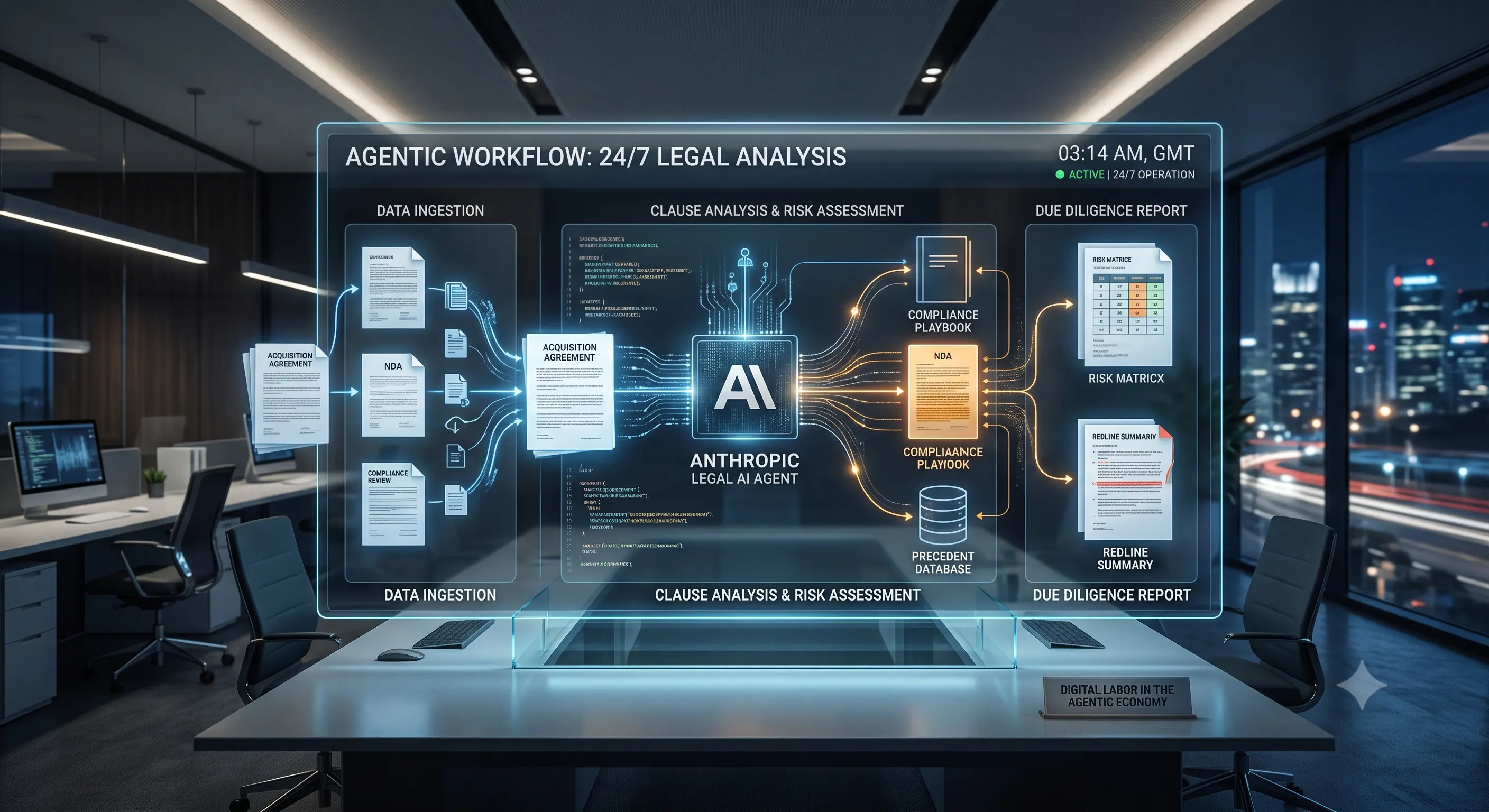
Definition: Claude for Legal is an orchestration layer and configuration ecosystem built by Anthropic specifically for law firms and in-house legal departments. Rather than functioning as a simple standalone chatbot, it operates through Model Context Protocol (MCP) connectors, 12 practice-area plugins, and direct Microsoft 365 integrations, allowing the Fable 5 model to securely query live data from enterprise platforms without exposing the firm's confidential data.
This architecture represents a departure from traditional generative AI usage. Historically, legal teams had to copy and paste sensitive documents into isolated web interfaces, risking compliance breaches and breaking the chain of custody. With Claude for Legal, the intelligence layer moves directly to where the data lives. It is designed to mitigate the hallucinations and data privacy risks that previously prevented large-scale enterprise adoption, functioning instead as a deeply integrated nervous system for legal operations.
How Claude for Legal Works in Practice
Deploying this ecosystem is less like installing an application and more like wiring a cognitive engine into an existing practice. Here is a step-by-step breakdown of how the workflow functions:
- Integration via MCP: The legal team connects the model to their existing document management systems, such as iManage, Box, or Ironclad, using secure MCP connectors. This establishes a live, read-only bridge to the firm's actual data.
- Plugin Configuration: Administrators deploy practice-specific plugins covering areas like Commercial, IP, or Employment law. These plugins run a cold-start interview to learn the firm's specific playbooks, risk tolerances, and internal house style.
- In-Place Drafting: A legal professional opens a massive, complex contract in Microsoft Word. Using the Claude add-in, they prompt the system to compare the document against the firm's stored corporate playbook.
- Reasoning and Redlining: The Fable 5 model analyzes the document clause-by-clause against the playbook, automatically generating tracked changes and detailed deviation summaries directly within the Word document.
- Human Verification: The attorney reviews the tracked changes, verifying citations against primary sources accessed via external authority tools like Thomson Reuters CoCounsel, before accepting or modifying the edits.
Real-World Enterprise Legal Use Case
Consider a mid-sized enterprise undergoing a major merger and acquisition event. The due diligence process typically involves teams of junior associates spending weeks manually reviewing thousands of vendor agreements, employment contracts, and intellectual property assignments inside a virtual data room to identify change-of-control provisions and liability risks.
In real enterprise workflows, teams notice that applying Fable 5 to this exact process fundamentally changes the timeline. The legal team can point the AI to the specific Everlaw directory via MCP. Fable 5, utilizing its massive one-million-token context window, can process hundreds of contracts simultaneously. It maps the dependencies, extracts the specific change-of-control clauses, and generates a unified risk matrix. What previously took a team of five associates three weeks is compressed into an overnight automated run, followed by a few days of senior-level verification and strategic assessment.
Comparison: Traditional Workflows vs. Fable 5 Ecosystem
The contrast between the legacy approach and the new AI-orchestrated reality is stark, fundamentally altering how legal labor is deployed.
| Feature | Traditional Legal Workflow | Fable 5 & Claude for Legal |
|---|---|---|
| Initial Document Review | Junior staff read documents line-by-line over several weeks. | AI redlines clauses against a custom playbook in minutes. |
| System Interaction | Manual downloading, local editing, and uploading to the DMS. | Direct read and write capabilities via live MCP connectors. |
| Research Grounding | Manual Boolean searches on isolated legal databases. | Live retrieval from verified sources like Westlaw or Casetext. |
| Operational Scalability | Strictly limited by headcount and available billable hours. | Limited only by API token budgets and compute access. |
Comparison with Existing Legal AI Tools
Anthropic is not the first entity to enter this highly lucrative space; specialized vendors like Harvey and LexisNexis have dominated the legal AI narrative for years. However, Claude for Legal acts as an infrastructure layer rather than a standalone proprietary wrapper. While Harvey builds highly specialized, proprietary fine-tunes specifically for BigLaw, Anthropic provides the foundational intelligence via Fable 5 and the open-source plumbing through plugins and MCP. In fact, companies like Legora and Harvey are actively building their own solutions on top of the Claude platform. Anthropic is effectively commoditizing the integration layer, applying immense pressure on incumbents whose primary competitive moat was a clean user interface layered over a basic API connection.
The Approaching Billing Cliff: Economic Realities
As organizations scale these workflows, they inevitably hit a severe financial friction point. Anthropic scheduled a synchronized token repricing event for June 23, 2026, known across the industry as the billing cliff. Claude Fable 5 is priced at $10 per million input tokens and $50 per million output tokens. This deliberate 5:1 output-to-input ratio reflects the immense computational cost of the model's advanced reasoning and agentic generation capabilities.
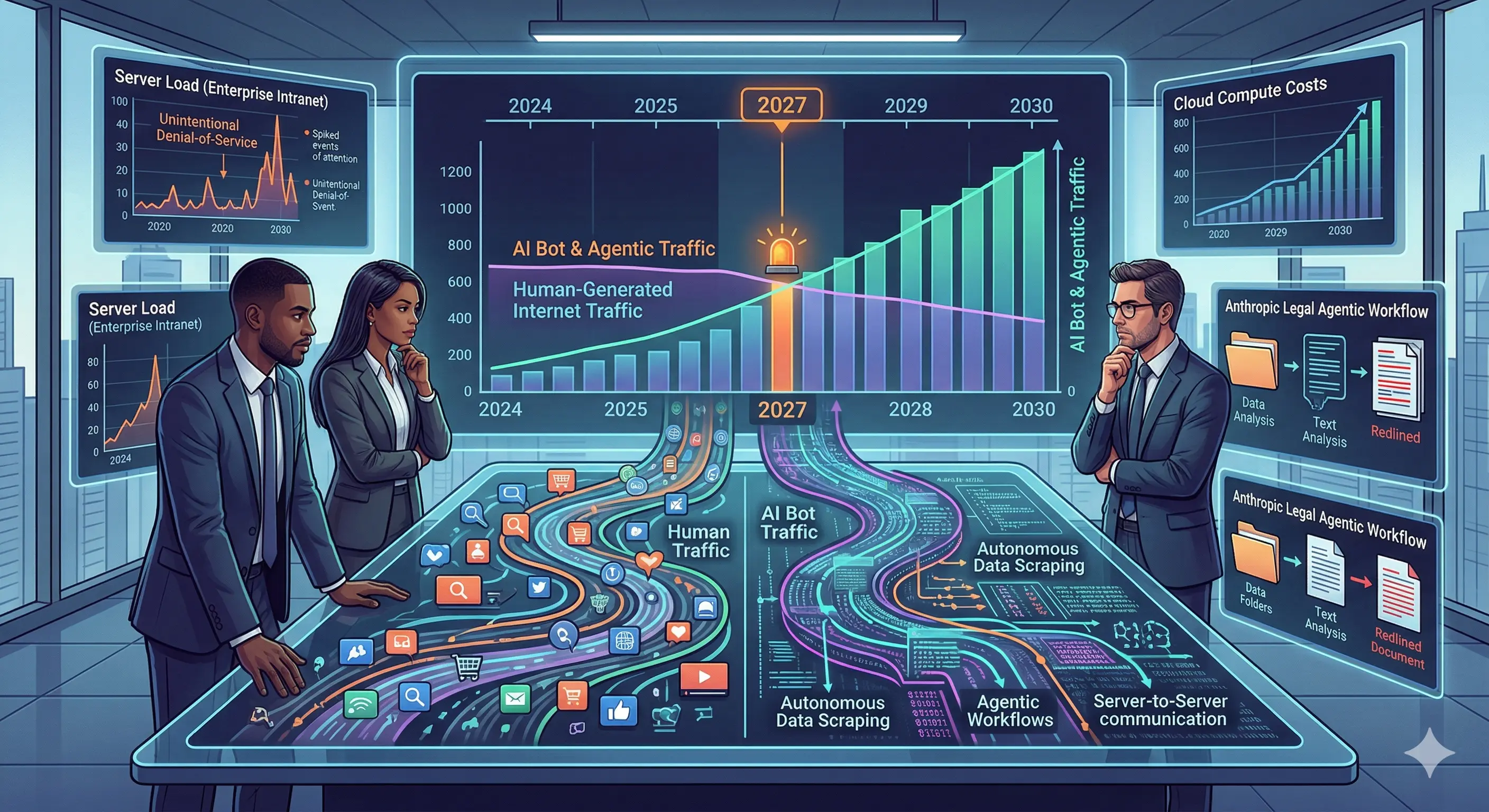
The billing cliff means that enterprises transitioning off promotional tiers or legacy pricing structures will see an immediate, unavoidable step-change in their API costs. For a legal department processing 50,000 contracts a month, analyzing an 80,000-token document might cost nearly a dollar per file in pure compute alone. When deployed at scale across thousands of matters, this creates a massive new operational expense line. The cliff structure means companies who built their tech stack on legacy rates see a sudden spike in monthly API costs, not a gradual ramp.
The economics of high-tier reasoning matter deeply when conversion rate and efficiency are the binding constraints on revenue. The billing cliff forces a rigorous evaluation of unit economics: the raw cost of the tokens versus the revenue generated or the exact human hours saved by the automation.
Where This Breaks Down in Real Use
One issue that keeps resurfacing is the dangerous assumption that high benchmark scores directly translate into seamless operational deployment. The reality on the ground is far more complex.
Cultural Resistance and Liability: Legal professionals are inherently trained to be skeptical. Even with robust enterprise safeguards, legal teams often resist trusting an AI with highly privileged client data. The liability remains entirely with the human attorney. If Fable 5 hallucinated a citation or misinterpreted a liability cap, the firm would bear the full malpractice risk. Trust cannot be installed via an API.
The Safety Margin Friction: Because Fable 5 possesses powerful dual-use capabilities, particularly in cybersecurity and code analysis, Anthropic implemented aggressive safety classifiers. While intended to block malicious use, this safety margin routinely flags benign queries. In practice, complex forensic accounting, detailed IT contract reviews, or audits of software vulnerabilities can trigger automated blocks, forcing the system to fall back to older models like Opus 4.8, abruptly disrupting the workflow and frustrating users.
Budget Misalignment: Many leadership teams mandate AI adoption without understanding the highly variable cost structure. The shift from fixed-seat SaaS licensing to consumption-based API billing causes intense friction between IT procurement and legal operations, particularly when usage unexpectedly spikes during a major litigation event or an intensive due diligence period.
Who Should NOT Use This
Despite the immense capabilities of Fable 5 and the Claude for Legal ecosystem, it is absolutely not a universal solution.
- Firms with Low Document Volume: If your practice relies heavily on bespoke, high-touch client counseling, emotional intelligence, and mediation rather than massive document review, the overhead of setting up MCP connectors and managing API costs will completely outpace the benefits.
- Teams Lacking Basic Data Hygiene: Fable 5 relies heavily on the contextual data it is fed. If your internal repositories or document management systems are a disorganized mess, the AI will retrieve and rely on outdated, conflicting precedents, amplifying your existing organizational chaos.
- Organizations Seeking Total Automation: For tasks requiring absolute, flawless deterministic accuracy with zero human review, generative AI remains the wrong tool. Teams looking to completely replace junior staff rather than strategically augment them are setting themselves up for critical failures.
Workforce Implications and Board-Level Strategy
This sounds efficient, but in practice, the integration of agentic AI models like Fable 5 is forcing boards of directors to completely rethink their workforce pyramids. Historically, professional services firms relied heavily on the leverage model, billing out an army of junior associates to handle the agonizing grind of document review. When Fable 5 can perform that foundational work in a fraction of the time, the traditional billable hour model comes under severe, existential pressure.
According to the World Economic Forum, while generative AI will displace certain routine cognitive tasks, it will drastically increase the premium placed on strategic judgment, human relationship management, and complex, nuanced negotiation. The enterprise AI strategy must therefore shift from asking how to cut headcount to asking how to elevate human capital.
Leadership teams evaluating this must recognize that Fable 5 is not a replacement for deep domain expertise; it is a cognitive exoskeleton for knowledge workers. The organizations that thrive will be those that aggressively deploy AI-driven productivity shifts while simultaneously retraining their staff to manage, verify, and strategize above the automation layer. As McKinsey estimates, the integration of generative AI across knowledge-based sectors could add trillions in value annually, but only for the organizations that successfully restructure their operating models to properly absorb the massive efficiency gains.
Frequently Asked Questions
What is Anthropic's Claude Fable 5?
Fable 5 is Anthropic's most capable widely released large language model, specifically designed for complex reasoning, multi-step problem solving, and long-horizon agentic workflows, featuring a massive one-million-token context window.
Why was Fable 5 temporarily suspended?
The government temporarily restricted export access to Fable 5 in early June 2026 due to national security concerns over its dual-use capabilities in identifying software vulnerabilities. It was restored after Anthropic implemented much stronger safety classifiers.
What exactly is the June 23 billing cliff?
It refers to a scheduled, synchronized token repricing event by Anthropic where the Fable 5 model was standardized at $10 per million input tokens and $50 per million output tokens, abruptly impacting enterprise API budgets and forcing a reevaluation of automated workflow costs.
How does Claude for Legal ensure data privacy?
It utilizes the Model Context Protocol to read data directly from secure enterprise repositories without moving the files, ensuring strict compliance and guaranteeing that client data is not utilized to improve the foundational AI models.
Will Fable 5 replace junior lawyers entirely?
No. While it rapidly automates time-consuming tasks like contract redlining and document synthesis, final legal judgment, professional accountability, and strategic application still strictly require human legal professionals.
Does Claude for Legal hallucinate?
Like all generative models, it has the potential to hallucinate. However, by grounding its responses in verified, internal enterprise data sources and live primary law databases, the risk is significantly reduced compared to standard web-based conversational AI interfaces.
The Path Forward
The return of Fable 5 and the maturation of the Claude for Legal ecosystem mark a definitive end to the experimental phase of enterprise AI. The technology now possesses the reasoning depth to execute highly complex, multi-document workflows, but it arrives with strict economic and operational demands. The approaching billing cliff acts as a necessary forcing function for discipline. Organizations must look beyond the novelty of automated drafting and focus on rigorous enterprise AI governance frameworks. By treating these advanced models as powerful, variable-cost infrastructure rather than magic solutions, leadership teams can intelligently restructure their operations, protect their profit margins, and empower their workforce to focus on high-judgment, high-value strategy.
Disclaimer: The information provided in this article is for educational and informational purposes only and should not be construed as legal, financial, or strategic advice. Organizations should consult with certified professionals before implementing enterprise AI solutions or altering corporate compliance protocols.