The Infrastructure Reckoning and the Cloud 3.0 Shift
What Cloud 3.0 Actually Means
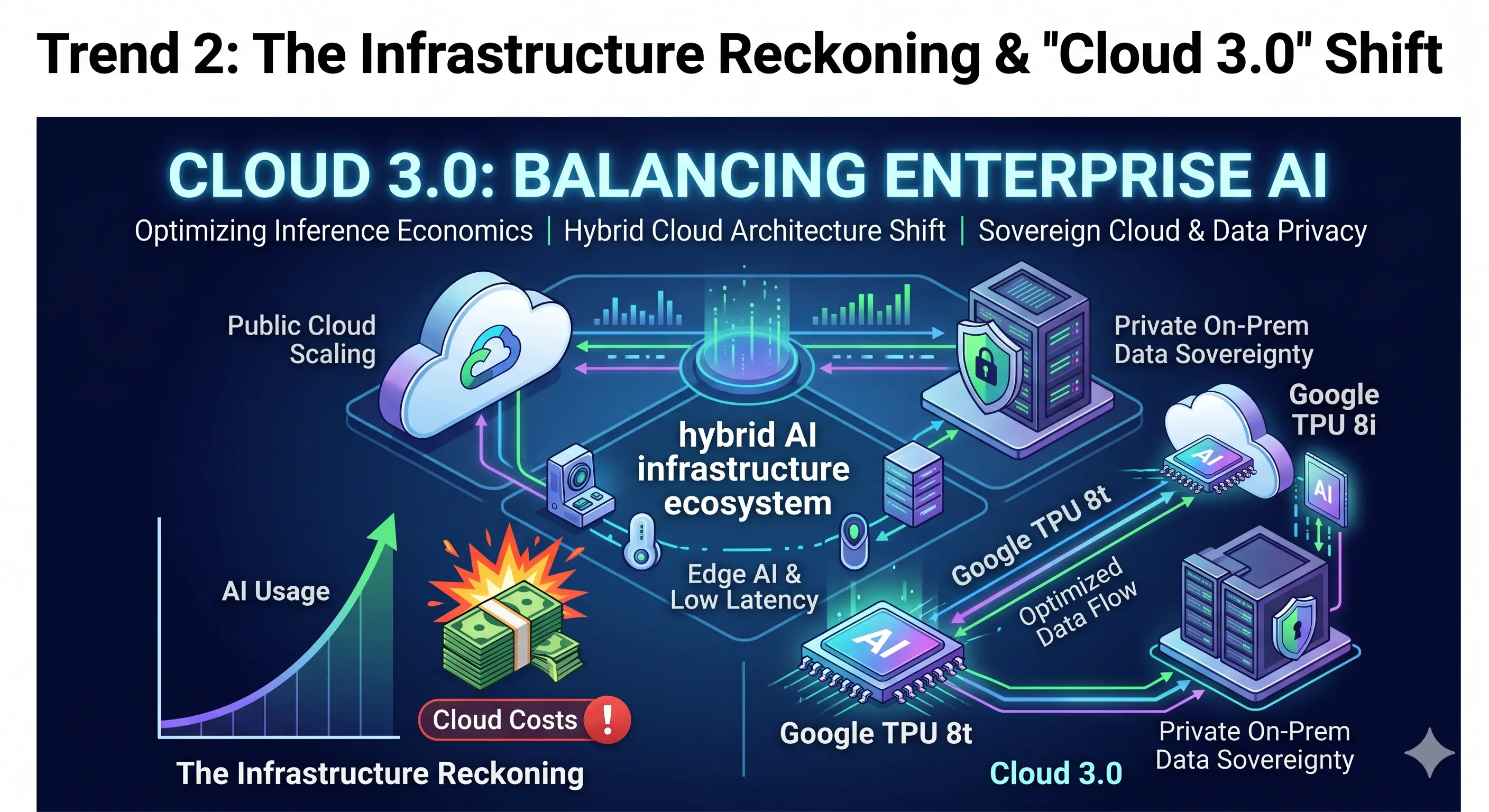
Definition: Cloud 3.0 is the emerging enterprise infrastructure model in which cloud platforms, AI systems, edge computing, governance controls, and cost-aware architecture operate as a unified business layer rather than separate technology functions.
For more than a decade, cloud adoption was measured by migration speed. Organizations moved workloads from on-premises environments into public cloud platforms and celebrated agility gains. That model is now being challenged.
The rise of generative AI, escalating infrastructure costs, GPU scarcity, data sovereignty requirements, and executive pressure for measurable returns are creating what many technology leaders describe as an infrastructure reckoning.
Cloud 3.0 is not simply another cloud upgrade. It represents a shift in how enterprises think about computing, economics, governance, and workforce design.
Why the Reckoning Is Happening
Enterprise cloud spending continues to grow globally. Gartner has projected worldwide public cloud spending to exceed hundreds of billions of dollars annually, while AI infrastructure spending is accelerating at an even faster pace.
At the same time, executives are discovering that moving workloads to the cloud does not automatically reduce costs. Many organizations now face unexpectedly high compute bills, duplicated tooling, and fragmented data architectures.
According to McKinsey, generative AI could contribute between $2.6 trillion and $4.4 trillion in annual economic value across industries. Capturing that value requires infrastructure capable of supporting large-scale AI workloads.
Cloud 1.0 vs Cloud 2.0 vs Cloud 3.0
| Phase | Primary Goal | Success Metric | Main Challenge |
|---|---|---|---|
| Cloud 1.0 | Migration | Workloads moved | Adoption resistance |
| Cloud 2.0 | Scale and automation | Operational efficiency | Complexity |
| Cloud 3.0 | AI-driven business value | Economic outcomes | Governance and cost control |
The AI Infrastructure Layer
Cloud 3.0 is heavily influenced by AI. Organizations increasingly require GPU clusters, vector databases, model orchestration platforms, governance systems, and retrieval architectures.
Major entities such as Amazon Web Services, Microsoft Azure, Google Cloud, NVIDIA, OpenAI, Anthropic, and Databricks are becoming central components of enterprise infrastructure planning.
Key Characteristics
- Hybrid cloud architecture
- AI-native workload planning
- Governance-by-design
- Cost visibility and FinOps practices
- Data locality and compliance controls
- Automated infrastructure operations
Anthropic's Legal AI Tool and Why It Matters
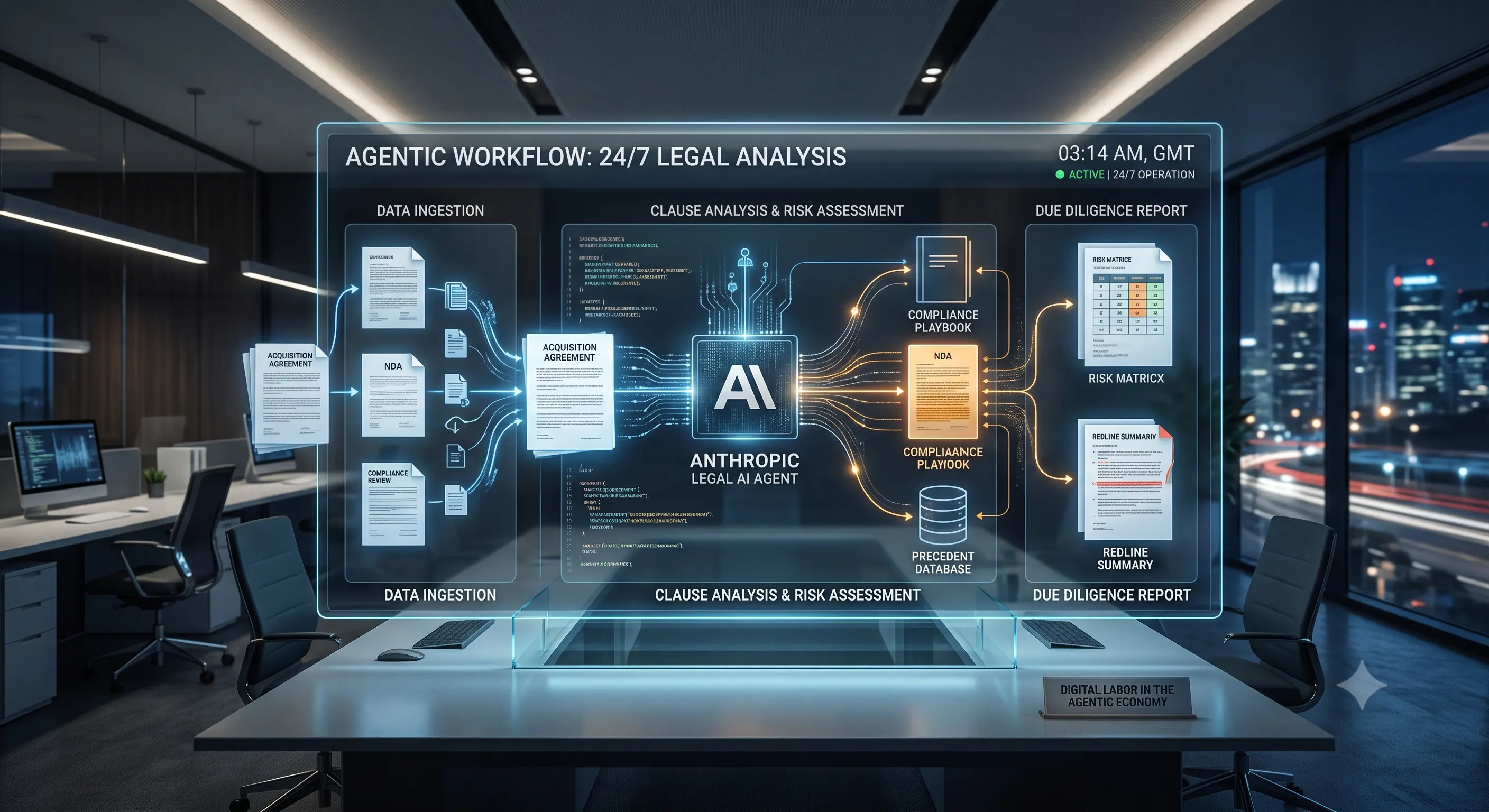
One of the most interesting developments in Cloud 3.0 is the emergence of domain-specific AI systems. Anthropic has increasingly positioned Claude as a platform for enterprise workflows, including legal research and document analysis.
How the Workflow Operates
- Legal documents are ingested into a secure environment.
- The system indexes contracts, policies, regulations, and case-related material.
- Retrieval systems identify relevant passages.
- Claude analyzes the material and generates structured responses.
- Citations and references are surfaced for human review.
- Legal professionals validate outputs before decisions are made.
This approach differs from traditional legal research where associates may spend hours manually reviewing contracts, precedents, and internal knowledge repositories.
Real-World Enterprise Use Case
Consider a multinational company reviewing thousands of supplier agreements after a regulatory change. Traditional workflows might require large review teams and weeks of effort. A legal AI workflow can identify clauses, summarize obligations, highlight risks, and accelerate initial analysis.
Comparison with Traditional Legal Workflows
- Faster document review
- Improved searchability
- Consistent knowledge retrieval
- Reduced repetitive administrative work
However, legal accountability remains human. AI assists professionals rather than replacing legal judgment.
Comparison with Other Legal AI Platforms
Compared with platforms such as Harvey AI, Lexis+ AI, and Thomson Reuters AI-enabled offerings, Anthropic's strength is often associated with long-context reasoning and enterprise integrations. Competitors may provide deeper legal-specific databases or proprietary legal content.
Pros
- Faster analysis
- Large document handling
- Improved knowledge access
- Workflow automation opportunities
Cons
- Potential hallucinations
- Governance requirements
- Data security considerations
- Need for expert oversight
Experience from Real Enterprise Environments
In real enterprise workflows, teams notice that infrastructure decisions are increasingly financial decisions. Technology leaders rarely discuss compute resources in isolation anymore. Conversations frequently include procurement teams, finance departments, compliance leaders, and business executives.
One issue that keeps resurfacing is visibility. Organizations often know how much they spend on cloud infrastructure, but they struggle to identify which business units generate value from that spending. Cloud 3.0 initiatives tend to succeed when economic accountability is built directly into architecture planning.
This sounds efficient, but in practice many AI initiatives reveal significant data quality problems. Teams discover duplicated records, inconsistent governance standards, and fragmented ownership structures. The infrastructure upgrade becomes a business transformation effort.
When leadership teams evaluate this transition, they often focus less on technology and more on operating models. The question shifts from “Can we deploy AI?” to “Can we manage AI at scale while maintaining trust, compliance, and financial discipline?”
Economic and Workforce Implications
Cloud 3.0 affects workforce design as much as infrastructure design.
- Infrastructure engineers require AI literacy.
- Data teams need governance expertise.
- Legal departments increasingly collaborate with technology teams.
- Finance teams adopt FinOps practices.
- Operations leaders become consumers of AI-generated insights.
According to the World Economic Forum Future of Jobs research, technology-driven changes are reshaping skill requirements across industries. The most valuable professionals are increasingly those who can bridge technical and business functions.
Stanford HAI research has also highlighted the growing importance of organizational readiness rather than model capability alone. Infrastructure without governance frequently underperforms expectations.
Data Summary
- AI demand is increasing infrastructure spending.
- Cloud optimization has become a board-level priority.
- Governance is moving from compliance activity to strategic capability.
- Hybrid architectures are becoming more common.
- Cost accountability is emerging as a competitive advantage.
Where This Breaks Down in Real Use
The Cloud 3.0 narrative can sometimes overlook implementation realities.
Budget misalignment is a common issue. Business leaders may expect rapid AI returns while infrastructure investments require longer planning cycles.
Cultural resistance also remains significant. Employees may distrust automation or worry about changing responsibilities.
Practical friction points include vendor lock-in concerns, skills shortages, data governance gaps, and integration complexity.
Over-automation is another risk. Organizations that aggressively automate critical decisions without appropriate oversight can introduce operational and compliance challenges.
For additional research and benchmarking, organizations frequently review publications from Harvard Business Review, Gartner, McKinsey, OECD, and the World Economic Forum.
Who Should NOT Use This Approach
Not every organization needs a full Cloud 3.0 strategy today.
- Very small businesses with limited digital operations.
- Organizations still modernizing basic infrastructure.
- Teams without data governance foundations.
- Companies pursuing AI primarily because competitors are doing so.
In these situations, targeted modernization may create more value than large-scale transformation initiatives.
Internal Linking Suggestions
- enterprise AI governance frameworks
- future of white-collar work
- AI-driven productivity shifts
- FinOps best practices
- hybrid cloud strategy
- enterprise data governance
Frequently Asked Questions
What is Cloud 3.0?
Cloud 3.0 is an infrastructure model that combines cloud computing, AI systems, governance, and economic accountability into a unified operating framework.
Is Cloud 3.0 only about generative AI?
No. AI is a major driver, but governance, economics, compliance, and workforce transformation are equally important.
Why are enterprises reassessing cloud investments?
Many organizations are seeking clearer returns on spending while supporting increasingly demanding AI workloads.
Can legal teams benefit from AI tools like Claude?
Yes, particularly for document review, knowledge retrieval, summarization, and workflow acceleration under human supervision.
Will Cloud 3.0 reduce infrastructure costs?
Not automatically. Better visibility and optimization may improve efficiency, but AI workloads can significantly increase spending.
What skills become more valuable in this environment?
AI literacy, governance expertise, cloud architecture, data management, and business-technology communication skills.
What is the biggest risk?
Implementing advanced AI systems without governance, accountability, and operational discipline.
Final Perspective
The infrastructure reckoning is ultimately less about servers, clouds, or models than it is about organizational maturity. Cloud 3.0 rewards companies that connect technology decisions with measurable business outcomes.
The next phase of enterprise computing will likely be defined by disciplined experimentation rather than aggressive expansion. Organizations that learn how to balance innovation, governance, workforce adaptation, and economic accountability will be better positioned to navigate what comes next.
Disclaimer: This article is for informational and educational purposes only and should not be interpreted as legal, financial, investment, or professional advice.