OpenAI’s “Spud” vs Anthropic’s Legal AI: What It Actually Means for Real Businesses
The enterprise AI space is changing fast—and honestly, it’s getting confusing for most teams.
Over the last few months, I’ve had multiple conversations with engineering managers, legal ops teams, and founders. Everyone is asking the same question:
“Should we wait for better AI… or start using what exists today?”
This question perfectly captures what’s happening right now.
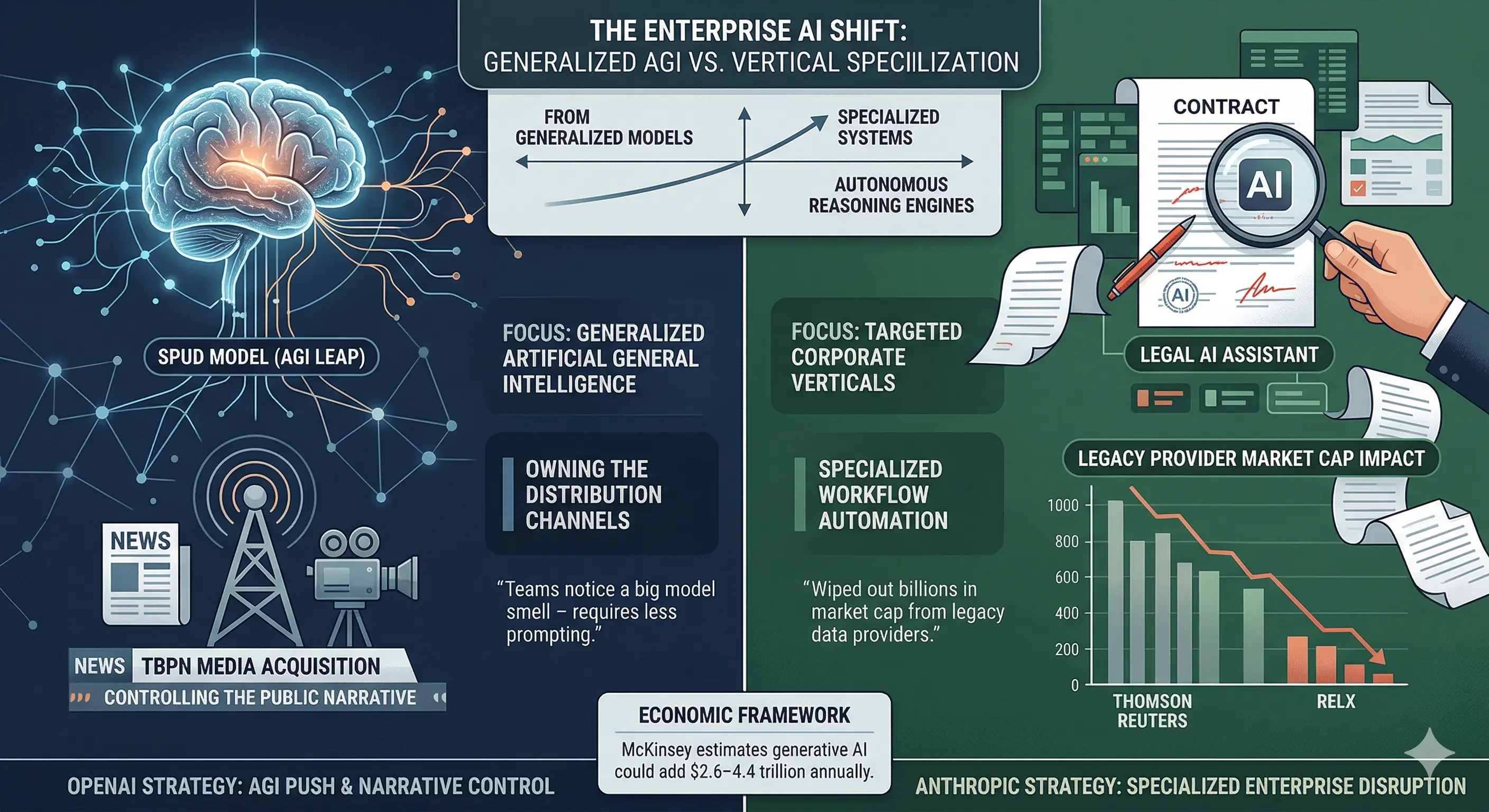
On one side, OpenAI is building its next big model (“Spud”) and expanding into media control. On the other side, Anthropic is quietly solving very specific, high-value problems—like legal workflows.
And from what I’ve seen working with backend systems, automation pipelines, and enterprise workflows… the second approach is already delivering real ROI.
The Big Shift: From Chatbots to Real Work Automation
A few years ago, AI tools were mostly used for:
- Writing content
- Summarizing documents
- Answering questions
Useful? Yes.
Transformational? Not really.
Today, things are different.
Companies are no longer asking, “Can AI generate text?”
They’re asking, “Can AI actually do the work?”
This is where the real disruption begins.
OpenAI’s Strategy: Big Models + Narrative Control
OpenAI’s upcoming model, internally called “Spud”, is expected to push toward more autonomous reasoning.
But what’s more interesting is their reported move into media (like TBPN).
From a business perspective, this makes sense.
If your technology is about to disrupt millions of jobs and workflows, you don’t just build the product—you control how people understand it.
In simple terms:
- Build powerful AI
- Control the conversation around it
This is a long-term play. It’s about shaping markets, not just selling tools.
Anthropic’s Approach: Solve One Expensive Problem Really Well
Now compare that with what Anthropic is doing.
Instead of chasing general intelligence, they focused on a painful, expensive problem:
Legal document workflows.
And this is where things get real.
I’ve personally seen how inefficient these systems are.
In one project, we had thousands of documents sitting across different servers, poorly named, inconsistent formats, and zero standardization.
Even simple extraction tasks required custom scripts and manual validation.
Now imagine adding contracts, NDAs, compliance documents… across multiple teams.
That’s exactly the problem Anthropic is targeting.
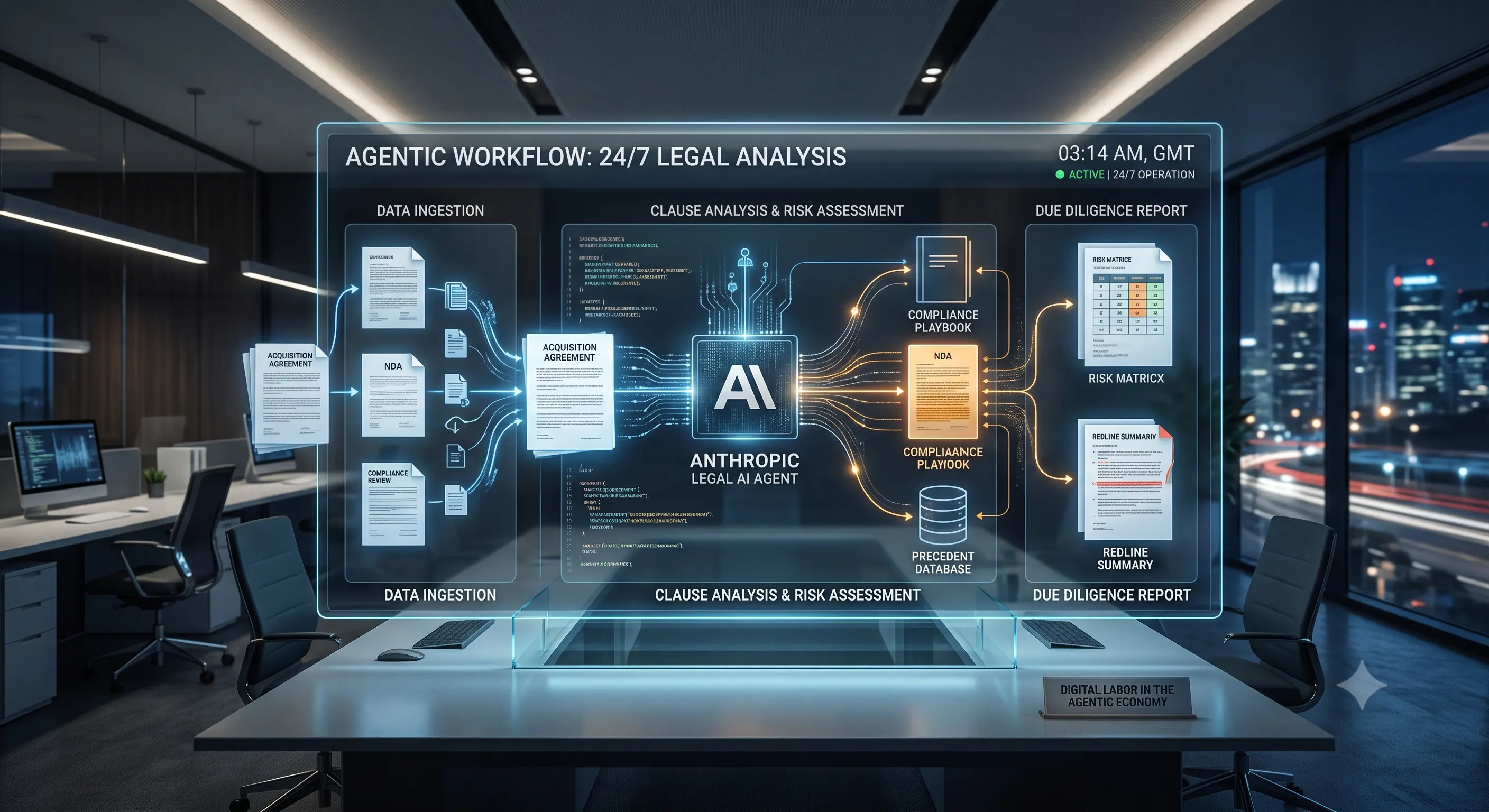
How Legal AI Actually Works in Practice
Let’s remove the hype and look at reality.
Here’s how these systems typically work inside a company:
1. Data Ingestion
The AI connects to internal systems and reads historical contracts.
Reality check: If your data is messy, results will be messy.
2. Clause Detection
It compares new contracts against past agreements.
Flags risky or unusual terms.
3. Automated Redlining
This is the real value.
The AI suggests edits based on company standards.
4. Human Review
A lawyer still reviews everything.
This step is non-negotiable.
So no—AI is not replacing lawyers.
But it is removing 60–70% of repetitive work.
What Most Articles Don’t Tell You (Real Experience)
Here’s the truth most blogs skip.
AI tools fail not because of the model—but because of the system around them.
In my experience working with scraping pipelines, ETL systems, and distributed services:
- Bad data breaks everything
- No workflow = no ROI
- Too many approvals slow automation
Even the best AI won’t fix:
- Unorganized file systems
- Missing documentation
- Internal team resistance
If anything, AI exposes these problems faster.
Who Should Use Legal AI (And Who Should Wait)
You SHOULD consider it if:
- You process high volumes of contracts
- You have standardized legal templates
- You want to reduce external legal costs
You should WAIT if:
- Your data is scattered everywhere
- Your workflows are unclear
- You handle highly unique legal cases
Jumping too early can actually waste money.
Where the Real Opportunity Is (Actionable Insight)
If you’re a developer, founder, or team lead, here’s what you should focus on:
1. Clean Your Data First
Structure your documents, standardize naming, centralize storage.
2. Automate Small Workflows
Start with one use case (like NDA review).
3. Add AI Later
Once your system is clean, AI becomes 10x more effective.
This is exactly how we approach backend systems:
First stability, then intelligence.
The Bigger Picture: Strategy for 2026
We’re seeing two clear paths:
- OpenAI: Build general intelligence and control global narrative
- Anthropic: Solve specific, high-value business problems
And right now?
Specialized AI is winning in real-world adoption.
Because businesses don’t need magic.
They need results.
Final Thoughts (What You Should Do Next)
If you’re running a team or building products, don’t get distracted by hype.
Instead, ask:
“Where is my team wasting the most time today?”
That’s where AI should go.
Not everywhere. Not all at once.
Just where it actually matters.
Because the future of AI is not about replacing humans.
It’s about building systems where humans do less repetitive work—and more meaningful decisions.
Disclaimer: This article is for informational purposes only and does not constitute legal or financial advice.