The Pentagon’s Palantir Maven AI Adoption & Anthropic Fallout
Introduction
AI adoption is moving faster than most companies expected.
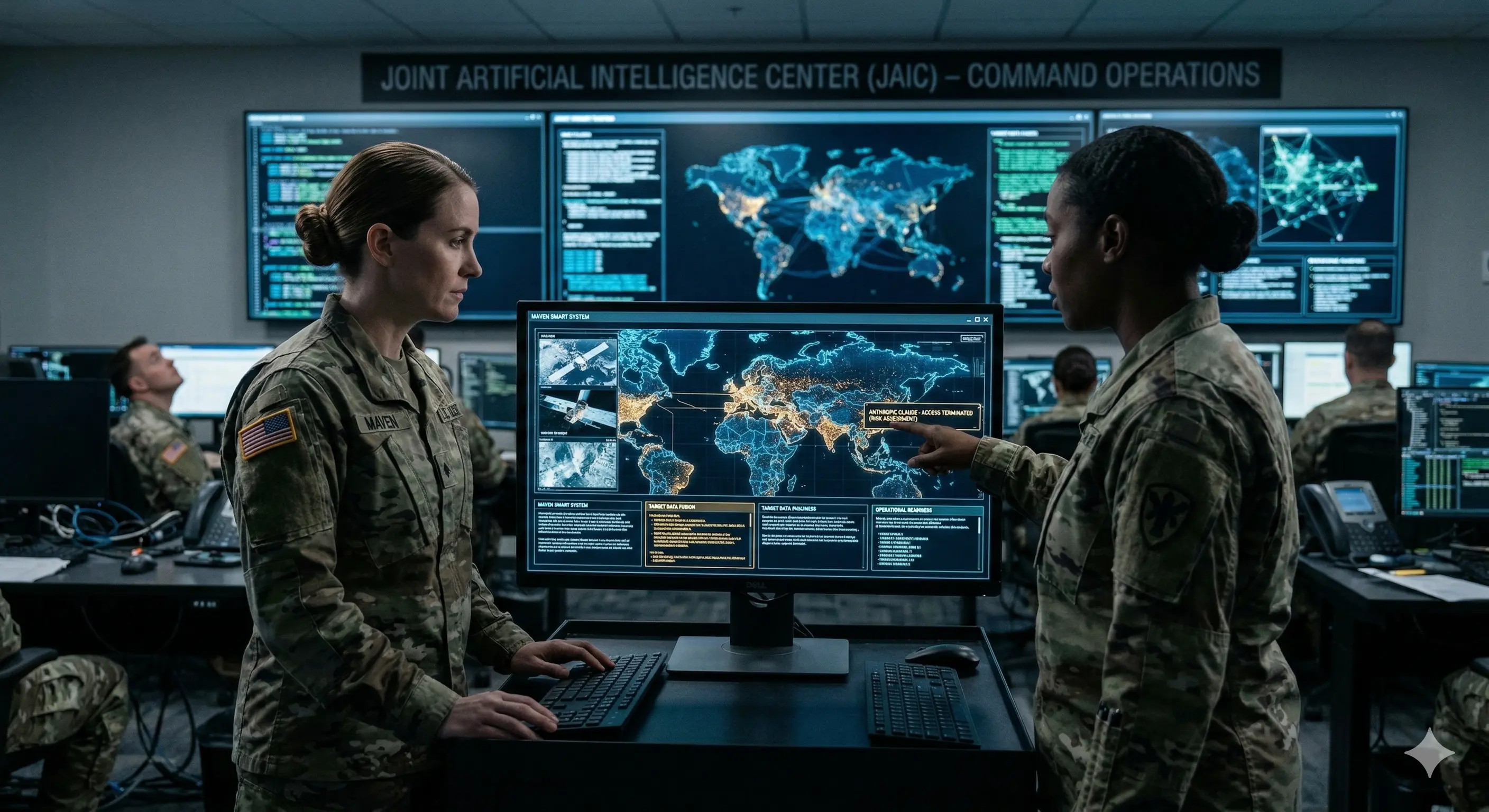
On March 9, 2026, the U.S. Department of Defense officially expanded Palantir’s Maven system into a long-term AI program. This wasn’t just another software announcement. It showed how deeply AI is becoming part of operational decision-making.
At the same time, Anthropic — once considered a major AI partner — reportedly lost its position in the ecosystem because of disagreements around usage policies and operational boundaries.
This situation reflects something many engineering teams are now facing in real life: AI adoption is no longer only about model quality. It’s also about governance, control, compliance, and trust.
Over the last few years, I’ve worked on backend automation systems, large-scale scraping infrastructure, and AI-assisted workflows. One thing becomes obvious very quickly in production systems:
The hardest part is rarely the AI model itself.
The difficult part is building reliable systems around it.
What is the Maven Smart System?
The Maven Smart System is designed to process large volumes of operational and visual data in real time.
It combines:
- Computer vision systems
- Machine learning models
- Decision-support infrastructure
- Large-scale data processing pipelines
The goal is simple: reduce the time required to analyze information and assist human operators with faster insights.
In many ways, this is similar to what enterprises are now trying to build internally with AI-powered workflows.
I’ve seen comparable patterns while building automation pipelines for data extraction and content processing. The promise always sounds great on paper — faster workflows, lower manual effort, better scaling.
But once systems go live, reality becomes much more complicated.
Why the Anthropic Situation Matters
Reports suggest Anthropic’s removal was not primarily about technical performance.
The disagreement centered more around policy restrictions and operational flexibility.
Anthropic has historically maintained stricter boundaries around:
- Autonomous weapon-related usage
- High-risk surveillance applications
- Certain military-focused deployments
This created friction in environments where broader AI usage was expected.
From an engineering perspective, this debate is actually very important.
In production systems, guardrails are not just ethical restrictions. They also improve reliability.
Without constraints, AI systems become harder to predict, harder to validate, and much easier to misuse.
I’ve personally seen automation pipelines fail because teams trusted AI-generated outputs too aggressively without adding verification layers. Small hallucinations can quietly become large operational problems.
That risk increases significantly at scale.
The Bigger Enterprise Problem: Vendor Lock-in
One issue that doesn’t get enough attention is vendor dependency.
When companies rely heavily on a single AI provider, several problems appear over time.
- Migration becomes difficult
- Infrastructure flexibility decreases
- Costs become harder to control
- Policy changes can disrupt operations
This is not limited to defense systems.
Even startups building AI products face the same challenge.
I’ve worked with systems where replacing one API provider required major backend rewrites because the architecture was tightly coupled to a single vendor.
Teams often underestimate this risk early on.
Fast integration feels convenient initially, but long-term maintenance becomes painful.
AI Workflows vs Traditional Workflows
| Feature | Traditional Workflow | AI-Driven Workflow |
|---|---|---|
| Data Processing | Manual analysis | Automated processing |
| Speed | Hours or days | Minutes or seconds |
| Decision Support | Human-generated reports | AI-assisted insights |
| Error Detection | Manual validation | Hybrid validation systems |
| Scalability | Limited by manpower | High operational scaling |
Where AI Systems Usually Break
1. Integration Problems
Most organizations still operate on fragmented infrastructure.
- Legacy systems don’t integrate cleanly
- APIs fail unexpectedly
- Data quality is inconsistent
- Internal tooling lacks standardization
In one scraping project I worked on, the AI component itself was stable. The real failures came from inconsistent upstream data and unreliable integrations.
This is extremely common.
2. Over-Reliance on AI
Teams sometimes treat AI outputs as authoritative instead of probabilistic.
That creates dangerous workflows.
AI should support decisions — not replace validation.
The best systems still keep humans involved in critical checkpoints.
3. Infrastructure Costs
AI adoption becomes expensive very quickly.
- GPU infrastructure
- Inference costs
- Monitoring systems
- Model fine-tuning
- Operational maintenance
Many companies underestimate long-term operational expenses.
4. Lack of Trust
People are naturally skeptical of black-box systems.
When teams cannot explain how decisions are generated, adoption slows down internally.
This becomes a major cultural challenge inside enterprises.
Who Should Avoid Heavy AI Adoption Right Now
Not every organization needs advanced AI infrastructure immediately.
In some cases, traditional automation is still the better option.
This approach may not work well for:
- Teams with poor data quality
- Organizations lacking backend engineering maturity
- Companies without monitoring infrastructure
- Low-risk workflows that don’t need AI automation
Many businesses rush into AI adoption before fixing their core systems.
That usually creates more complexity instead of efficiency.
Industry Perspective
Industry reports from organizations like the World Economic Forum and Gartner continue to highlight the rapid expansion of AI across enterprise operations.
However, the conversation has shifted.
Companies are no longer asking:
“Should we adopt AI?”
Now the real question is:
“How do we adopt AI safely and sustainably?”
That difference matters.
Practical Lessons for Engineering Teams
- Build strong backend systems before adding AI layers
- Keep humans involved in critical workflows
- Design for vendor flexibility early
- Invest in monitoring and validation systems
- Focus on reliability instead of hype
In my experience, teams that succeed with AI usually treat it as an infrastructure problem first — not just a model problem.
That mindset changes everything.
Frequently Asked Questions
Why was Anthropic reportedly removed?
The disagreement appears to have centered around operational policies and restrictions on certain AI use cases.
Does AI make final decisions in these systems?
No. Human oversight still remains essential in critical operations.
What is the biggest risk with enterprise AI adoption?
Over-reliance on AI outputs without proper validation and monitoring.
Is this only relevant to military systems?
No. Similar challenges exist in startups, enterprises, and automation platforms across industries.
Final Thoughts
AI adoption is accelerating everywhere.
But technology alone is not the competitive advantage.
The real advantage comes from:
- Reliable infrastructure
- Strong engineering practices
- Clear governance
- Balanced automation
AI can improve speed and scale dramatically.
But poorly designed systems can also amplify mistakes just as quickly.
That’s why responsible implementation matters more than aggressive adoption.
At the end of the day, AI is still just a tool.
The real value comes from the systems, processes, and people behind it.
Disclaimer: This article is intended for informational and educational purposes only.